Certificate (Online) | W-001
Water Science, Management & Governance
Course Director: Dr Hasrat Arjjumend
MODULE 1: WATER SCIENCE, PRINCIPLES AND TECHNOLOGIES
Instructors for Module 1: Prof. Segundo Edilberto Vergara Medrano
Dr. Sérgio António Neves Lousada
Mr. Kartik Omanakuttan
Ms. Shahrzad Khatiby
Field Practitioners:
Dear Participants,
We welcome you to Module 1 “Water Science, Principles and Technologies”.
Water is one of the most fundamental resources supporting life, ecosystems, economies, and societies. Yet despite its apparent abundance, freshwater resources are increasingly under pressure from population growth, urbanization, agricultural expansion, industrial development, pollution, ecosystem degradation, and climate change. Effective water management therefore requires more than technical expertise; it requires an understanding of the scientific processes governing water systems, the ecological functions they support, and the institutional arrangements through which water resources are managed and governed.
This module provides the scientific and conceptual foundation upon which the subsequent modules of this course are built. Before exploring watershed management, river basin planning, wetlands, governance frameworks, policies, and climate adaptation, it is essential to understand how water moves through natural systems, how water quality is maintained or degraded, how aquatic ecosystems function, and how human interventions influence hydrological and ecological processes.
Module 1 consists of six units. The first unit introduces the hydrological cycle as an interconnected system and examines the relationships between precipitation, runoff, groundwater recharge, river flows, and aquatic environments. Participants will explore how human activities alter hydrological processes and reshape water availability across scales. The second unit examines the distribution of freshwater resources globally and regionally, patterns of water use across sectors, and the growing challenge of water scarcity. Particular attention is given to the physical, economic, and governance dimensions of water stress and competition among users. In the third unit, participants will be introduced to the chemical characteristics of water and will explore the role of nutrients, contaminants, and pollutants in shaping water quality. Participants will analyse how agricultural intensification, urbanization, industrialization, and emerging contaminants influence freshwater systems and public health.
The fourth unit examines the structure and functioning of aquatic ecosystems, focusing on ecosystem degradation, biodiversity loss, eutrophication, habitat fragmentation, and the governance challenges associated with maintaining ecological integrity in freshwater and marine environments. The fifth unit explores groundwater occurrence, recharge processes, aquifer systems, groundwater depletion, contamination, and governance. Participants will investigate groundwater as both a hydrological resource and a socio-economic asset critical to water security and food production. The last unit analyses irrigation systems, water use efficiency, water optimization strategies, and precision irrigation technologies. It also examines the environmental, economic, and governance implications of irrigation development in a changing climate.
What is Expected from Participants?
Participants are expected to devote sufficient time to carefully read the lesson materials, examine the case studies, review supplementary resources, participate in discussions, and complete the assigned learning activities. The course is designed not only to provide scientific knowledge but also to encourage critical reflection on contemporary water challenges and management responses. Each unit contains explanatory text, analytical discussions, case illustrations, reflection exercises, and discussion questions. Participants are encouraged to engage actively with the material and relate the concepts to their own professional, academic, or regional experiences.
Throughout the module, participants will:
- Throughout the module, participants will:
- Review case studies from different regions of the world;
- Participate in discussion forums;
- Attempt quizzes and assessment exercises;
- Attend lectures, webinars, and interactive sessions where applicable;
- Reflect on the implications of water science for management and governance practice.
Learning Progression
Module 1 establishes the scientific foundation for the entire course. The concepts introduced here—including hydrology, freshwater availability, water quality, aquatic ecology, groundwater systems, and irrigation—provide the basis for understanding the watershed, wetland, river basin, and governance themes explored in subsequent modules.
By the completion of this module, participants should be able to critically interpret water-related environmental problems, understand the ecological and hydrological processes underlying those problems, and appreciate the governance challenges associated with sustainable water management.
We wish you success in your studies and look forward to your active participation throughout the course.
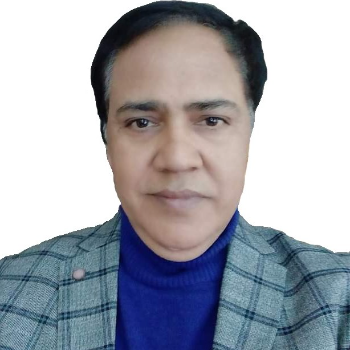
Instructor
TABLE OF CONTENTS
Unit 1.1 Water Cycle, Groundwater and Surface Water
1.1.1 The Hydrological Cycle as a Connected System
1.1.2 Surface Water Processes, Catchments and River Flow
1.1.3 Groundwater Occurrence, Recharge and Storage
1.1.4 Surface Water and Groundwater as One Resource
1.1.5 Hydrological Variability, Extremes and Climate Change
1.1.6 Applied Hydrological Reading of a Catchment
1.1.7 Case Studies in Hydrological Connection
1.1.8 Wrap Up Unit 1.1
Unit 1.2 Freshwater Resources, Availability, Water Use and Scarcity
1.2.1 Global Distribution of Water and Freshwater
1.2.2 Renewable Water Availability and the Water Balance
1.2.3 Water Use by Sector and the Difference Between Withdrawal and Consumption
1.2.4 Water Stress, Water Scarcity and Seasonal Mismatch
1.2.5 Drivers of Increasing Scarcity
1.2.6 Water Availability and Scarcity
1.2.7 Case Studies in Freshwater Availability and Scarcity
1.2.8 Wrap Up Unit 1.2
Unit 1.3 Water Chemistry, Nutrients and Pollution
1.3.1 Foundations of Water Chemistry and Water Quality
1.3.2 Nutrients, Organic Matter and Oxygen Dynamics
1.3.3 Pollution Pathways and Contaminant Groups
1.3.4 Water Quality Monitoring, Indicators and Interpretation
1.3.5 Implications for Human Health and Ecosystems
1.3.6 Case Studies in Nutrient and Chemical Pollution
1.3.7 From Monitoring to Action
1.3.8 Wrap Up Unit 1.3
Unit 1.4: Water Biology & Ecology
1.4.1 Understanding Aquatic Ecosystem Degradation
1.4.2 Ecological, Economic, and Public Health Consequences
1.4.3 Case Studies: Aquatic Degradation as a Governance Problem
1.4.4 Legal and Policy Regulations in Aquatic Ecosystems
1.4.5 Diversions and the Disruption of Aquatic Connectivity
1.4.6 Impacts of Fragmentation and Conversion
Unit 1.5: Groundwater Hydrology (Groundwater Depletion, Contamination, and Governance Failure)
1.5.1 Participatory Exercise in Forum W-001
1.5.2 Aquifer Systems, Recharge Dynamics and the Mechanics of Silent Depletion
1.5.3 The Cascading Consequences of Groundwater Misuse
1.5.4 Case Studies: Groundwater as a Socio-Political Crisis
1.5.5 Rights Frameworks, Energy Subsidies, and Structural Drivers of Overextraction
1.5.6 Fragmentation of Groundwater Systems and Impacts of Unregulated Extraction
Unit 1.6: Irrigation Water and Technologies
1.6.1 The Scale, History and Stakes of Global Irrigation
1.6.2 Salinization, Waterlogging and Disease in Irrigated Landscapes
1.6.3 Case Studies: Irrigation as a Socio-Technical Trade-off
1.6.4 Irrigation Technologies and Water Optimization
1.6.5 Legal, Economic and Institutional Frameworks for Irrigation Governance
1.6.6 Irrigation Infrastructure and Hydrological Fragmentation