Unit 2.3 Watershed Development Implementation and Evaluation
Instructor: HG/Er. Sabina Khatri
In this Unit 2.3, we examine watershed development as both a technical discipline and a governance challenge. Watersheds, the natural hydrological units through which all surface water drains to a common outlet, are the most ecologically coherent scale at which to plan and manage land, water and ecosystem resources. Yet watershed programmes have repeatedly shown that technical interventions alone, without robust institutions, community participation and systematic evaluation, fail to produce lasting results. This unit is organised around three interconnected themes. The first is the concept and practice of watershed development itself: what it means, how approaches have evolved over time, and how interventions interact with communities and livelihoods. The second is water institutions and governance: the formal and informal rules, organisations and decision-making arrangements that determine whether watershed management succeeds or collapses. The third is monitoring and evaluation: the structured processes through which we track whether interventions are working, learn from failure, and support adaptive management over time. Throughout this unit, you are asked to bring your professional experience to bear. Watershed management problems are not abstract. They are happening in specific places, with specific communities, shaped by specific institutional and policy contexts. The concepts developed here are only as useful as the practical judgements they inform.
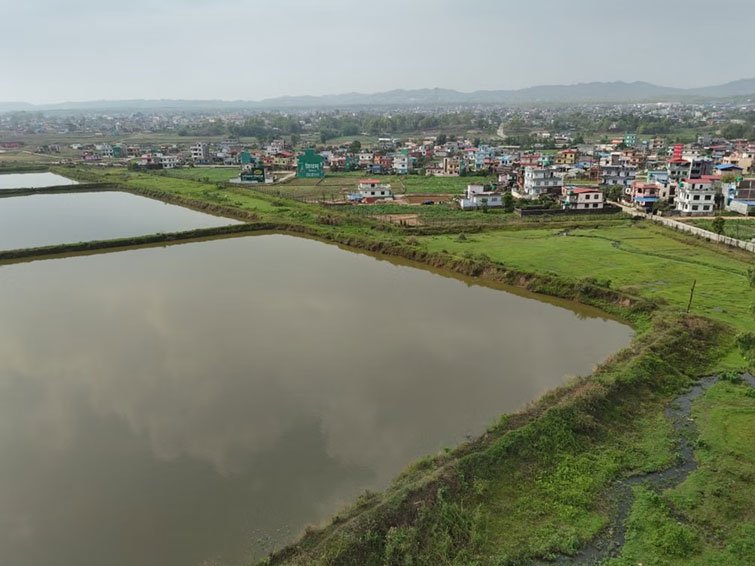
Figure 2.3.a. A scenic blend of rural fish ponds and urban housing in Nepal. Source: Pexels (Open access)
2.3.1. Watershed Development
What is Watershed Development?
A watershed is a natural hydrological unit defined by topography: the area of land from which all surface runoff drains to a common outlet, whether a river reach, a lake or a coastal point. This natural delineation makes the watershed the most appropriate planning unit for integrated management of land, water and ecological resources, because hydrological, ecological and land-use processes within it are functionally connected. Watershed development refers to a coordinated set of interventions aimed at conserving soil and water resources, improving land productivity, enhancing groundwater recharge, reducing erosion and strengthening ecosystem functions within a defined drainage basin. Over time, it has evolved from a predominantly engineering-oriented activity — focused on physical structures such as check dams, terraces and bunds — into a more comprehensive development strategy that integrates ecological restoration with socioeconomic improvement, community governance and livelihood diversification (FAO, 2006). In the contemporary development paradigm, watershed development is understood as a multidimensional process that simultaneously addresses environmental degradation, food insecurity and rural vulnerability. It encompasses soil and moisture conservation, afforestation, water harvesting, sustainable agricultural practices and community-based resource governance. These interventions are designed not only to improve environmental conditions but to stabilise agricultural production, enhance income opportunities and reduce communities' exposure to climatic variability. Watershed development therefore operates at the intersection of environmental sustainability and rural development — a distinction that has profound implications for how programmes are designed, implemented and evaluated. Research on watersheds can be organised into three complementary analytical perspectives (Batey and Kim, 2021; FAO, 2006). The first is the engineering perspective, which addresses technical challenges in water harvesting, erosion control and structural design (Wang and Yang, 2014; Zhang and Tang, 2010). The second is the scientific perspective, which focuses on hydrological, ecological and geomorphological methods (Allanson et al., 2012; Dingman, 2015; Razavi et al., 2020; Usman, 2018; Vörösmarty et al., 2000). The third is the study-oriented perspective, which integrates insights from social sciences, economics, governance and policy to examine how institutions, community participation and decision-making processes shape watershed outcomes (Pahl-Wostl, 2009; Lebel et al., 2006; Woodhouse and Muller, 2017).
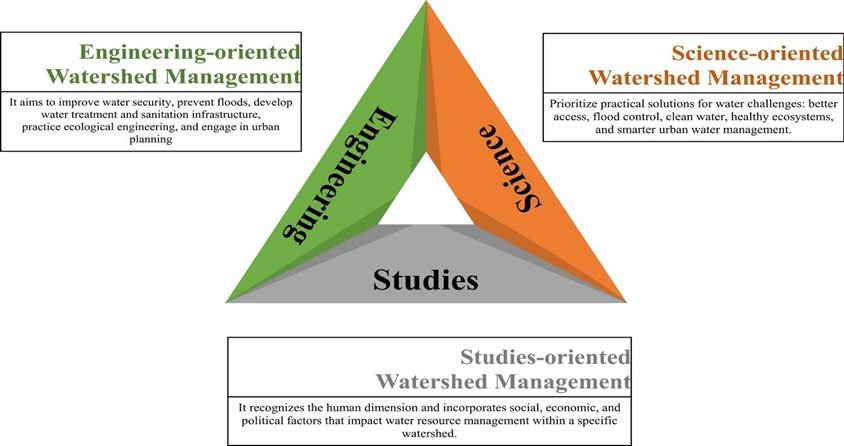
Figure 2.3.1.a. Three empirical categories of watershed management adapted from (Batey & Kim, 2021).
Despite three decades of programme experience, a significant gap has persisted in comprehensive frameworks for assessing the socioeconomic impacts of watershed interventions. Naji et al. (2024) address this gap by proposing an integrated conceptual framework that draws on the Sustainable Livelihoods Framework, Political Ecology, Theory of Change and Community-Based Natural Resource Management. This combined approach provides a more holistic analytical lens through which watershed interventions can be evaluated across their environmental, social and institutional dimensions, recognising that impacts on livelihoods, food security and household resilience cannot be separated from their ecological and governance contexts.
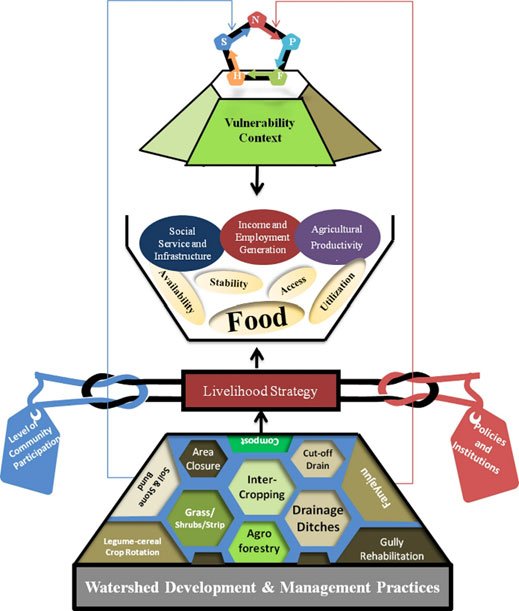
Figure 2.3.1.b. A Comprehensive impact analysis conceptual framework-Watershed Development & Management Practices as the Foundation of Entire practice, Naji et al, 2024.
Structural and Non-Structural Interventions
Watershed development draws on two broad categories of intervention. Structural measures include physical soil and water conservation works: check dams, percolation tanks, contour bunds, gully plugs, terracing and farm ponds. These aim to slow runoff, reduce erosion, increase infiltration and improve groundwater recharge. The effectiveness of any physical structure depends critically on appropriate site selection, design for local hydrology and soil conditions, and ongoing maintenance — without which even well-designed structures deteriorate rapidly (Critchley and Siegert, 1991). Non-structural measures encompass land-use management, afforestation, agricultural best practices, institutional strengthening and livelihood support. In practice, the most effective watershed programmes combine both categories, because physical structures cannot be maintained without the organisational capacity to manage them, and institutional investment alone cannot address the biophysical dimensions of soil loss and hydrological degradation.
Community Participation as a Defining Feature
Community participation is not an optional component of watershed development. It is a condition of sustainability. Experience across Asia, Africa and Latin America consistently demonstrates that programmes designed and implemented without substantive community involvement tend to produce structures that fall into disrepair once external support is withdrawn. Kerr et al. (2002) demonstrate that community-led watershed projects achieve better outcomes in sustainability and equity compared with top-down interventions, primarily because communities who participate in design and decision-making develop ownership of the assets created and the management systems needed to sustain them. The importance of "soft components" in watershed management — stakeholder engagement, training and capacity building, institutional support and community ownership — is as significant as the physical interventions themselves. A study of agricultural water management along the Volta and Limpopo river basins found that successful adaptation was attributable not primarily to the technology deployed, but to strong local demand, appropriate design, capacity development and community ownership of the process (de Bruin et al., 2015). Participatory Rural Appraisal techniques enable communities to contribute to decision-making, implementation and monitoring in ways that generate locally relevant, socially accountable outcomes.
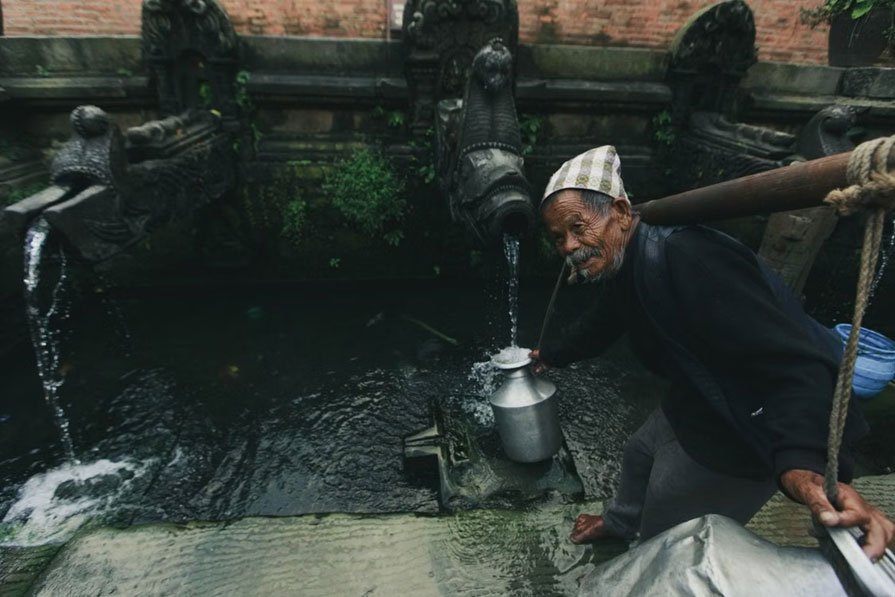
Figure 2.3.1.c. A man collecting water from a traditional stone fountain, known as a Dhunge Dhara, in Nepal. Source: Pexels (open access)
Integrating Traditional and Scientific Knowledge
A more recent recognition in watershed management is the essential contribution of traditional and indigenous knowledge systems. Local communities across Indonesia, South Asia and sub-Saharan Africa possess substantial knowledge related to soil conservation, water management, forest stewardship and ecosystem resilience — knowledge developed through generations of observation and practice in the specific landscapes they inhabit. Nugroho et al. (2023) propose a sociotechnical framework that combines scientific approaches, governance mechanisms and traditional ecological knowledge to improve watershed sustainability. Their core argument is that successful watershed restoration depends not only on technical interventions but on social capital, community institutions and the active recognition of indigenous practices — and that policymakers who treat traditional knowledge as supplementary rather than foundational routinely miss the most effective and durable solutions.
Read the Bare Fact
Watershed development is often presented as an environmental intervention. In practice, it is a rural development strategy with powerful distributional consequences. Who participates in planning determines who benefits from outcomes. Who maintains the structures determines how long they function. Who holds formal rights over watershed resources determines who captures economic gains from improved land and water productivity. These are not technical questions. They are governance questions, and they determine whether watershed investment improves the lives of the most vulnerable, or primarily benefits those already better positioned to capture its gains.
Task and Instructions for Participants
All participants are advised to watch the following open-access videos carefully before proceeding to the narration and case studies below.
Essential Watch
This documentary by John D. Liu (2009), Hope in a Changing Climate, illustrates large-scale watershed restoration across Ethiopia, Rwanda and China. Watch with attention to the relationship between ecological restoration and social transformation.
Additional Watch
Rwanda's Green Revolution: 30 Years of Environmental Restoration and Conservation Success provides a synthesis of community-centred restoration approaches. Focus on how different governance and participation structures shape programme outcomes across different national and ecological contexts.
(Copyright: Video creators retain copyright. Links are to open-access educational content.) While watching, consider: What is the relationship between landscape restoration and community livelihoods in these examples? Who makes decisions, and who benefits?
Narration: Watersheds as Social and Ecological Systems
A watershed does not exist as a purely physical entity. It is a social-ecological system in which physical processes — rainfall, infiltration, runoff, sediment transport, groundwater recharge — interact continuously with human decisions about land use, water extraction, vegetation management and agricultural practice. A farmer's decision to till downslope affects the erosion rate below. A community's decision to fence a degraded hillside affects baseflows in the valley. A government's decision to build a dam affects sediment supply to a delta hundreds of kilometres downstream. Understanding watershed development therefore requires holding the natural and human systems together in a single analytical frame. This framing has practical implications for programme design. A watershed programme that installs check dams without addressing the land management decisions driving erosion on the slopes above will find its structures silted within a few monsoon seasons. A programme that provides agricultural training without ensuring reliable water access will fail to change farming behaviour in the face of seasonal uncertainty. A programme that creates a watershed committee without devolving real decision-making authority to it will find the committee performing a ceremonial function while actual resource decisions are made elsewhere.

Figure 2.3.1.d. The underwater ecology of water. Source: Pexels (Open access)
Watershed development that works treats communities as the primary agents of change, technical infrastructure as a tool in service of their agency, and governance institutions as the architecture that makes sustained collective action possible.
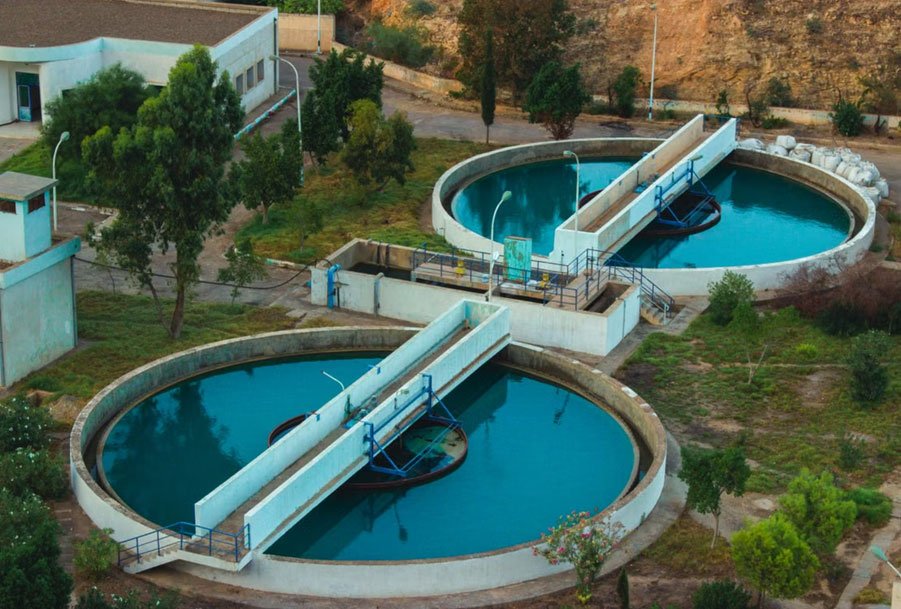
Figure 2.3.1.e. A hydro treatment facility. Source: Pexels (Open access)
2.3.2. Water Institutions and Governance
Understanding Institutions in the Water Sector
Institutions are the humanly devised rules that structure behaviour and shape interactions among individuals and organisations (North, 1990). They comprise both formal rules — laws, regulations, contracts, formally recognised rights — and informal norms, conventions and social practices that communities develop to coordinate behaviour around shared resources. Institutions are not the same as organisations, though the two are related: an organisation such as a water user association operates within the institutional rules governing water rights, maintenance obligations and fee collection; the institutional framework provides the rules, while the organisation is the player within them (Bandaragoda, 2001; Saleth and Dinar, 2004). In the water sector, formal water institutions are typically composed of three interdependent components: water law, water policy and water administration (Saleth and Dinar, 2004). Water law establishes the legal basis for water rights, ownership, allocation and dispute resolution. Water policy defines the goals and priorities that guide public investment and regulation. Water administration encompasses the organisations, procedures and capacities through which law and policy are implemented. The three components are not independent: the effectiveness of water law depends on administrative capacity to enforce it; the coherence of water policy depends on its grounding in legal frameworks; and the performance of water administration depends on clear legal mandates and policy guidance.
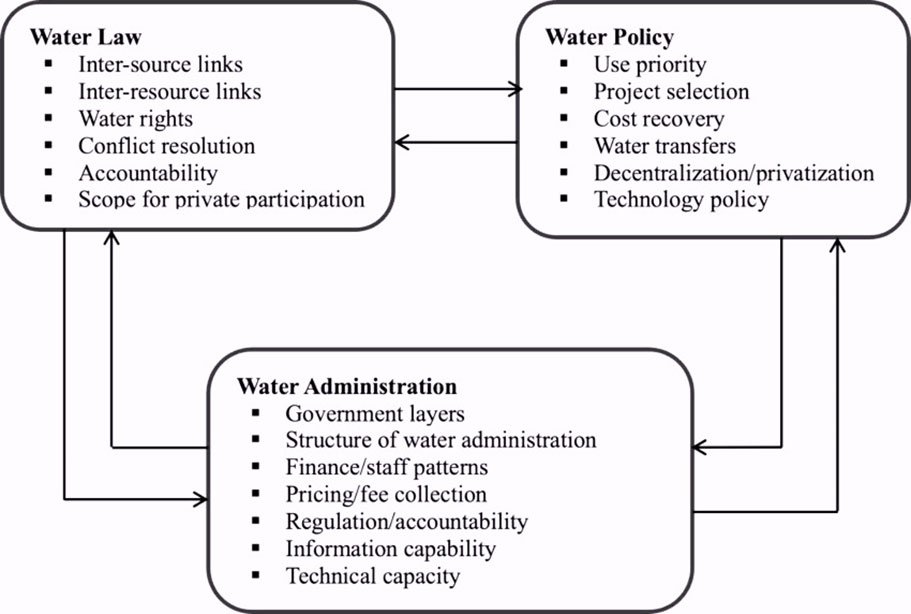
Figure 2.3.2.a. Decomposition of water institutions and linkages within a water institution (Adapted and modified from Saleth and Dinar 2004, pp 102.). Source: Apio et al, 2024
The Institutional Decomposition and Analysis (IDA) framework developed by Saleth and Dinar (2004) assesses institutional effectiveness through a two-stage process. In the first stage, water institutions are disaggregated into their core components — law, policy and administration — and the strength of linkages among them is assessed. Overall institutional performance reflects both the individual quality of each component and the coherence of their interaction. In the second stage, each component and each aspect of water sector performance is further disaggregated to enable systematic evaluation. This analytical architecture is valuable precisely because it forces attention to the weakest links in an institutional chain: a well-designed water law achieves little if administrative capacity to enforce it is absent, and sophisticated water policy is undermined by outdated legal frameworks that cannot give effect to its provisions.
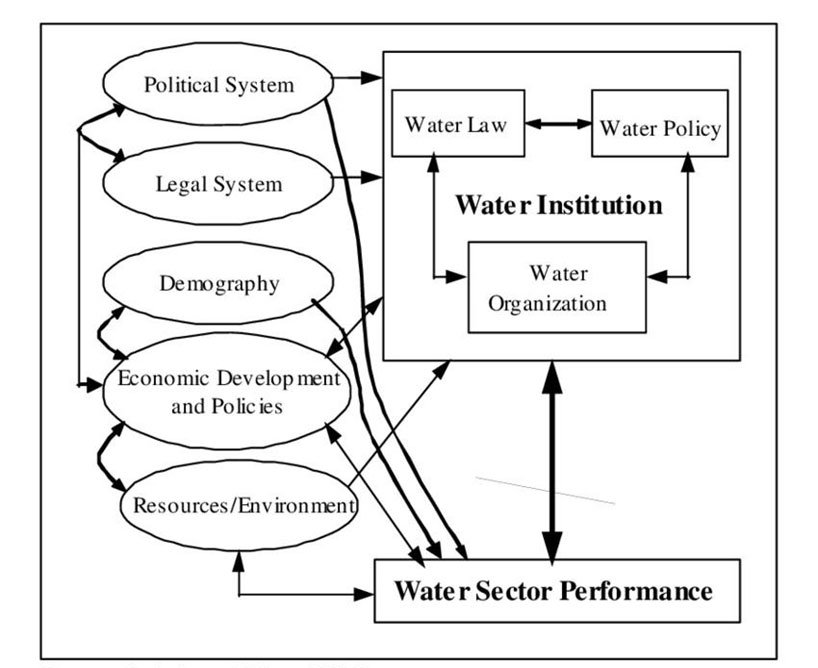
Figure 2.3.2.b. Water-Institutional-Environment-A-Partial-Representation. Source: Saleth and Dinar 2004
The IWRM Framework and the Governance Crisis
The 1992 International Conference on Water and the Environment in Dublin, which produced the foundational principles of Integrated Water Resources Management (IWRM), identified a fundamental insight that remains as relevant today as it was three decades ago: the water crisis is a governance crisis. Fragmented institutional arrangements — in which water supply, water quality, agriculture, land use, urban development and environmental protection are managed by separate agencies with little coordination — are a primary driver of water mismanagement. Because water is a mobile resource that crosses every political and administrative boundary it encounters, no single agency's mandate is coextensive with its behaviour (García et al., 2019). The result is that each agency manages its piece of the puzzle while no one manages the puzzle. GWP's IWRM framework identifies institutions and participation as one of its four interdependent pillars. These pillars — the enabling environment (policies, laws, financing), institutional roles (organisations at all levels), management instruments (tools for allocation, assessment and regulation), and participation and community engagement — are mutually reinforcing (GWP, 1996). Improvement in one pillar is insufficient without commensurate development in the others. An enabling environment without institutional capacity to implement it produces policy on paper. Institutions without financial resources produce agencies without tools. Management instruments without community legitimacy produce decisions that are technically sound but socially rejected.
Practical Examples of Governance in Basin Management
The Kura-Aras River Basin, Caucasus and Western Asia
The Kura-Aras basin, shared by Armenia, Azerbaijan, Georgia, Iran and Turkey, illustrates the consequences of inadequate transboundary water governance. The basin supports diverse ecosystems and millions of people, yet persistent mistrust among riparian states has inhibited the cooperative arrangements that effective basin management requires. Suleymanov (2025) demonstrates that while strong governance mechanisms — formal agreements, shared monitoring, joint technical bodies — are widely recognised as necessary for fostering collaboration and conflict mitigation, they have not been established at the scale or depth the basin requires. The result is continued water stress, poor coordination of upstream and downstream uses, and an absence of the transparency and accountability mechanisms that would allow riparian states to build the trust necessary for effective joint management.
The Citarum River Basin, West Java, Indonesia
The Citarum — one of the most heavily polluted rivers in the world and the water source for millions of people in West Java — illustrates the consequences of institutional fragmentation within a single national system. Dina (2025) examines governance within the River Basin Water Resources Management Coordination Team (TKPSDA) through institutional analysis, finding that structural power imbalances and fragmentation among the eighteen organisations formally involved in basin governance limit the body's effectiveness as a true coordinating institution. The coordination team exists; meaningful coordination, in the sense of aligned decisions and shared accountability, largely does not. The study recommends reforms to strengthen collaborative governance, improve resource sharing among agencies, and transform the current loosely coupled arrangement into a more cohesive policy community capable of supporting equitable and effective river basin management (Rhodes, 1997; Marsh and Smith, 2000).
Both cases illustrate a recurrent pattern in water governance: formal institutional structures are created, often in response to external pressure or crisis, but without the substantive mandate, resources and political backing to function as genuine governance bodies. The architecture of governance is present; its animating substance is not.
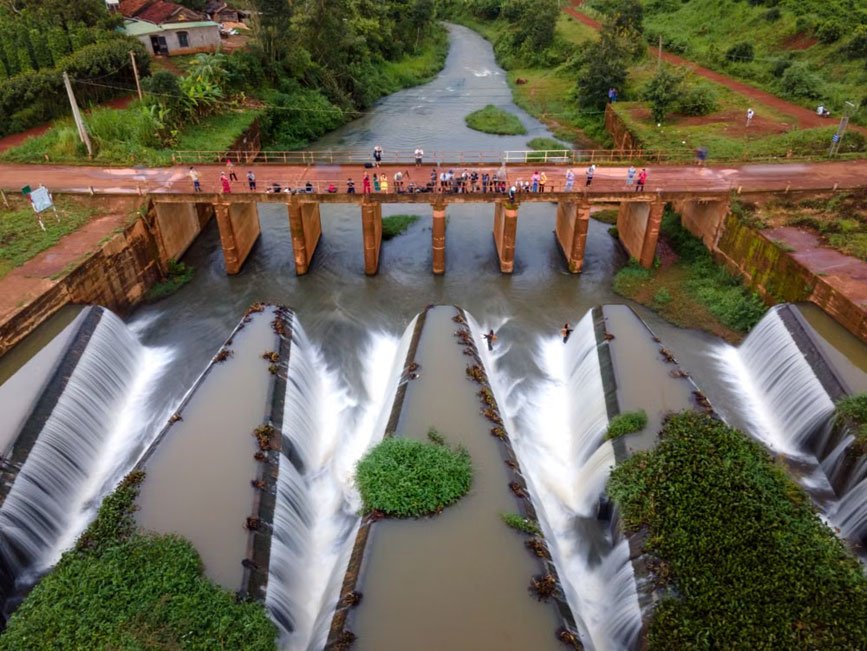
Figure 2.3.2.c. A method of water management. Source: Pexels (Open access)
2.3.3. Monitoring and Evaluation of the Watershed Development
Why Monitoring and Evaluation is Non-Negotiable
Monitoring and evaluation is not an administrative add-on to watershed development. It is the mechanism through which a programme learns whether it is working, identifies what needs to change, and accumulates the evidence base necessary for adaptive management and policy improvement. Without it, watershed programmes risk becoming input-driven rather than results-oriented — measuring success by the number of structures built, trees planted or workshops conducted, rather than by whether soil erosion is declining, groundwater levels are recovering, or household food security is improving (FAO, 1977). Monitoring is a continuous process of tracking system states and intervention outputs against a baseline and planned targets. Evaluation examines, at defined points in time, the extent to which programme objectives have been achieved, and why. Together they form an integrated feedback loop: monitoring detects changes and signals problems; evaluation interprets those changes and informs decisions; adaptive management applies those decisions to improve programme design and implementation. Watersheds are particularly demanding environments for M&E because they are dynamic, interconnected systems in which upstream actions affect downstream users, ecological processes operate at multiple scales and timescales, and social and biophysical outcomes are inseparably entangled. The M&E system must therefore be designed to capture this complexity — not reduce it to a handful of simple output indicators.
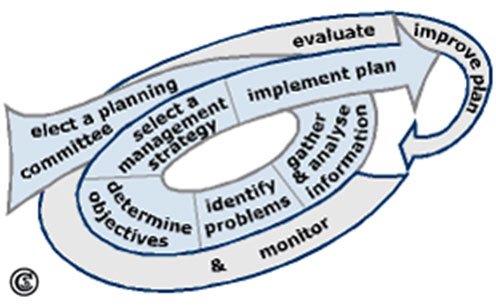
Figure 2.3.3.a. Monitoring and evaluation-two important tasks in Watershed Management planning. Image Credit: after data from Heathcote 1998
Indicators, Baselines and Evaluation Stages
Effective watershed M&E integrates biophysical and socioeconomic indicators. Biophysical indicators capture changes in the physical and ecological system: groundwater levels, streamflow variability, soil erosion rates, sediment yield, vegetation cover and water quality parameters. Socioeconomic indicators capture changes in the human system: agricultural productivity, household income, employment generation, food security and levels of community participation in resource management. Neither set of indicators is sufficient alone. Watershed development that improves soil cover without improving household incomes may lack community support for long-term maintenance. Watershed development that increases incomes through expanded irrigation without addressing groundwater recharge may be generating gains that are unsustainable (Kolavalli and Kerr, 2002; Wani et al., 2008; FAO, 2023). Baseline surveys, conducted before implementation begins, establish the reference point against which change is subsequently measured. Monitoring is typically conducted at multiple spatial scales — plot, micro-watershed, sub-watershed and basin level — using a combination of field measurements, household surveys, remote sensing, GIS analysis, automated sensors and Participatory Rural Appraisal. Mid-term evaluations allow for adaptive management during implementation. Post-implementation evaluation assesses long-term effectiveness, sustainability and equity of outcomes, including unintended consequences and distributional effects (Tesfahun et al., 2026).
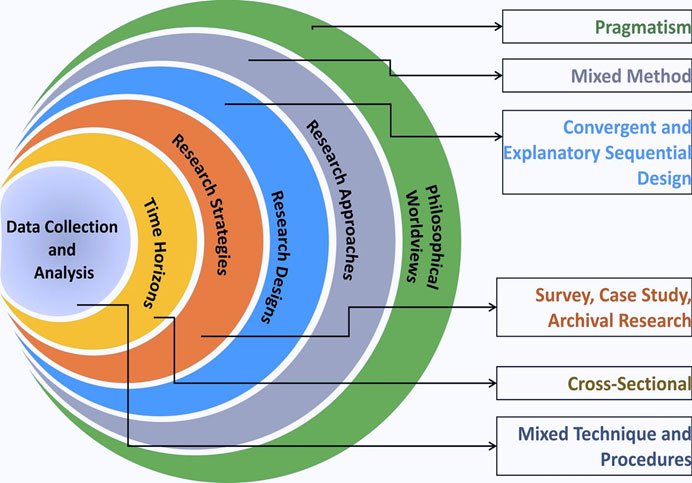
Figure 2.3.3.b. The M&E Framework to analyze the impact of watershed development on socioeconomic development. Source: Naji et al., 2024
M&E systems also serve an accountability function. By making progress visible and measurable, they support stakeholder coordination, public accountability and evidence-based investment decisions. Community participation in M&E — through local validation of data, participatory monitoring and community-led reporting — strengthens the social legitimacy of findings and builds local capacity for ongoing self-assessment.
Task and Instructions for Participants
Before proceeding to the case studies below, all participants are advised to watch the following video to develop a prior understanding of the upcoming case study.
Greening the Loess Plateau, China documents one of the most ambitious and well-monitored watershed rehabilitation programmes ever undertaken, and illustrates directly how biophysical recovery and socioeconomic improvement can be tracked and attributed to watershed interventions.
(Copyright: Video creators retain copyright. Links are to open-access educational content.) While watching, consider: What indicators were used to measure recovery on the Loess Plateau? Were these biophysical, socioeconomic, or both? What was the role of government, community and external finance?
Case Study 2.3-A: The Loess Plateau Watershed Rehabilitation Project, China
Instructions
Read the following case carefully. The Loess Plateau project is among the most extensively documented examples of successful large-scale watershed rehabilitation, and it offers important lessons about the relationship between ecological restoration, institutional commitment and socioeconomic outcome. After reading, respond to the analytical questions below.
The Loess Plateau in northern China is one of the most severely eroded landscapes on Earth. Centuries of intensive land use — cultivation of steep slopes, deforestation and overgrazing — left the region with some of the highest soil erosion rates globally and among the highest sediment concentrations in any river system in the world. The Yellow River, which drains the plateau, carried sediment loads that created chronic flooding risk downstream, deposited silt in reservoirs and river channels, and undermined agricultural productivity across an enormous area. Rural poverty in Loess Plateau communities was both a product of this degradation and a driver of it: households cultivating exhausted, eroding slopes had no alternative but to continue. Between 1994 and 2002, the Chinese Government, supported by the World Bank, implemented the Loess Plateau Watershed Rehabilitation Project across approximately 35,000 km² of severely degraded land (World Bank, 2007). The project's core interventions included large-scale terracing of steep slopes to reduce runoff and create level cultivation surfaces, conversion of marginal sloping cropland to grassland and orchard, large-scale afforestation with native species, grazing bans in the most sensitive areas, and construction of check dams to trap sediment and create flat, fertile farmland in gully beds.
The ecological outcomes were substantial and measurable. Annual sediment load in the Yellow River from the project area was reduced by more than 100 million tonnes. Vegetation cover increased dramatically across the plateau, with satellite imagery documenting the greening of previously bare hillsides. Groundwater levels in some areas began to recover. Erosion rates declined significantly across intervened areas. The socioeconomic outcomes were equally significant. Farm incomes increased as terraced fields on level ground proved far more productive than the eroding slopes they replaced. Access to gully-bed fields created by sediment impoundment behind check dams provided communities with high-fertility flat land previously unavailable to them. Poverty rates in project areas declined substantially over the project period, and rural-to-urban migration, while continuing, was moderated in communities that retained viable agricultural livelihoods. Several governance features contributed to the project's success. Government commitment — at both national and provincial levels — was strong and sustained, providing the institutional framework and financial resources for a programme operating at a scale beyond the capacity of any community or local authority alone. Community involvement in site selection and implementation increased local ownership. A systematic M&E framework tracked both biophysical and socioeconomic indicators, enabling programme adaptation and providing the evidence base for subsequent scaling and replication. The Loess Plateau case demonstrates that large-scale watershed rehabilitation is physically achievable, economically viable and socially beneficial — but that it requires a combination of institutional commitment, technical expertise, community engagement and rigorous monitoring that is rarely assembled without sustained political and financial support.
Analytical Questions
All participants must answer the following questions and post them in Forum W-001.
- The Loess Plateau project combined biophysical restoration (terracing, afforestation, sediment control) with economic transformation (increased farm incomes, reduced poverty). How did these two dimensions reinforce each other? Would either have been sustainable without the other?
- The project operated at a scale — 35,000 km2 — that required strong central government commitment and World Bank financing. What does this imply for the governance conditions necessary to achieve watershed restoration at the landscape scale?
- What M&E indicators would you have prioritised for this project and how?
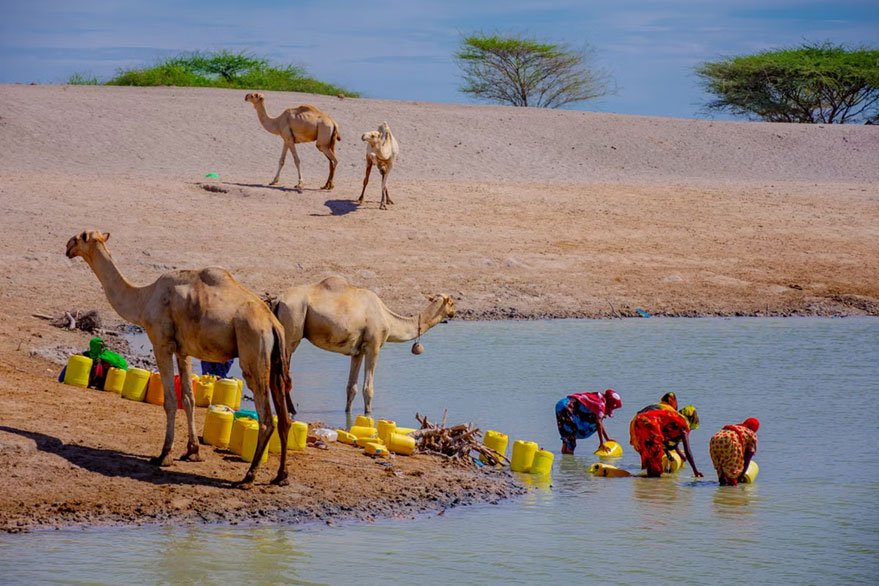
Figure 2.3.3.c. Scarcity of water in Ethiopia. Source: Pexels (Open access)
Case Study 2.3-B: Post-Project Watershed Deterioration in Eastern Tigray, Ethiopia — When Monitoring Stops, Gains Reverse
Instructions
This case examines what happens when watershed interventions are technically sound but institutionally shallow — when community participation is limited, M&E systems are inadequate, and programme support is withdrawn before management capacity is consolidated. It is presented not as a failure story but as a learning story, with evidence about what conditions are necessary for watershed gains to persist.
In Eastern Tigray, one of Ethiopia's most degraded landscapes, watershed management programmes implemented over two decades introduced a range of physical soil and water conservation measures — stone bunds, hillside terraces, area closures and check dams — across eroded hillsides and gully systems. During project implementation, these measures produced measurable improvements in vegetation cover, reduced erosion and in some areas improved water availability. As externally supported, they generated optimism about the potential for watershed rehabilitation in severely degraded dryland environments. When project support ended, however, the trajectory reversed. Gebregergs et al. (2022) document that physical soil and water conservation structures experienced deterioration rates of 47 to 64 percent following project phase-out. Stone bunds collapsed or were dismantled. Area closures were no longer enforced. Biological measures such as grass planting and tree establishment received insufficient maintenance to survive. The ecological gains that had been accumulated during the project period were progressively lost. The causes of this deterioration were not primarily technical. They were institutional. Programme implementation had followed largely top-down approaches, with limited genuine community participation in design or decision-making. Communities perceived the structures as belonging to the programme, not to themselves, and had neither the sense of ownership nor the practical organisational capacity needed to maintain them. Watershed management committees, established during implementation, lacked real authority, resources and community legitimacy. The integration of biological and physical measures was insufficient, creating systems where physical structures protected slopes but vegetation cover — which requires active management to establish and maintain — did not develop to the point where it could sustain protection without continued inputs. The scale of intervention also created a monitoring problem. Watersheds treated were large, management was complex, and monitoring systems established during the project were not designed to be sustained by community or local government actors after external support ended. Without monitoring, deterioration was not detected early enough to trigger corrective action. The Eastern Tigray case illustrates a pattern documented globally: watershed programmes that achieve good biophysical results during implementation but fail to build the community management institutions, local governance capacity and monitoring systems needed to sustain those results after the programme ends. The lesson is not that such programmes are futile — the Loess Plateau case demonstrates they are not. The lesson is that technical intervention without institutional investment is temporary. As Gebregergs et al. (2022) conclude, the long-term sustainability of watershed interventions depends fundamentally on continued community engagement, regular maintenance, and strong collaboration among local communities, government agencies and non-governmental organisations.
Mandatory Quiz: [Click Here]
Additional Example: Chehel-Chai Watershed, Golestan Province, Iran
Not all watershed M&E studies focus on crisis or failure. Karimi et al. (2022) examined the effects of watershed management practices on ecosystem services in the Chehel-Chai Watershed and found significant improvements in regulating services — runoff control, erosion reduction and carbon sequestration — following intervention. Among the practices evaluated, walnut orchard development emerged as the most effective single intervention for simultaneously improving environmental outcomes and socioeconomic livelihoods. This finding illustrates that well-designed M&E systems do not only demonstrate whether interventions are working; they identify which specific practices produce the most valuable and sustainable combinations of ecological and human benefit, supporting evidence-based prioritisation of future investments.
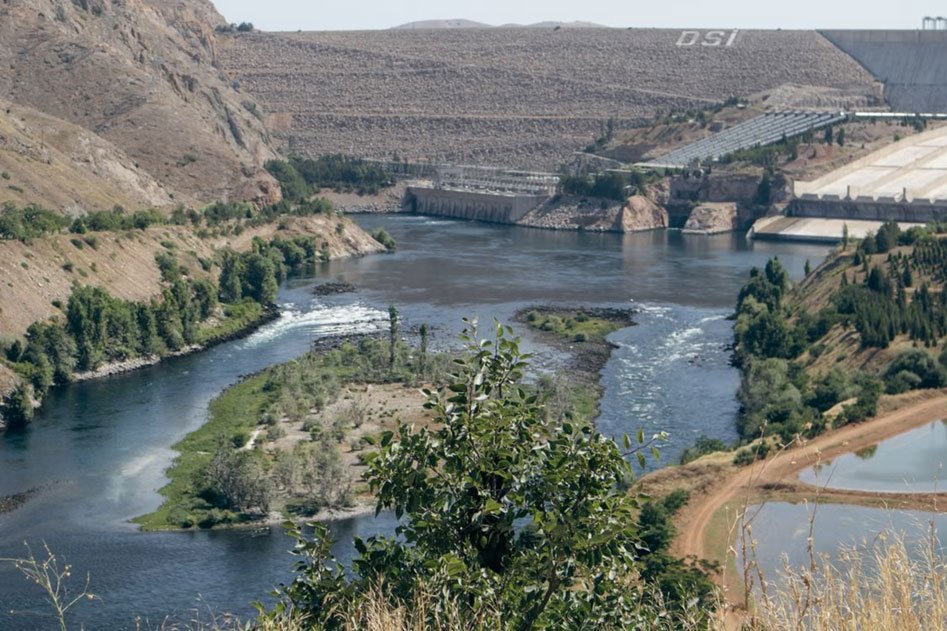
Figure 2.3.3.d. Keban Dam and its reservoir on the Euphrates River in Turkey. Source: Pexels (Open access)
Wrap Up Unit 2.3: Synthesis and Reflection
Please prepare a short synthesis and post it in Forum W-001 under the tag "Wrap Up Unit 2.3". Your synthesis should address all three of the following points.
- One new insight you have gained from this unit — about watershed development, institutional governance, or monitoring and evaluation — that changes how you understand a specific challenge in your professional context.
- One watershed programme or water governance arrangement in your region that reflects the issues discussed in this unit. Using evidence from the Loess Plateau, Limpopo-Volta, Eastern Tigray and Chehel-Chai examples discussed above, assess how governance structures, community participation and monitoring arrangements determined the outcome. Are similar dynamics at work in the case you know?
- Whether watershed management in your country addresses ecological, social and institutional dimensions in an integrated way, or focuses primarily on physical structures and engineering outputs. What would need to change — in law, in institutional structure, in financing, or in programme design — for a more genuinely integrated approach to take hold?
Closing Note
Watershed development promises much: healthier soils, more reliable water, better harvests, improved livelihoods, landscapes that can absorb the shocks of a less predictable climate. These promises are achievable. The evidence from the Loess Plateau and from successful programmes in India, Ethiopia, Iran and elsewhere demonstrates that degraded watersheds can recover, that communities can build and sustain management systems, and that the ecological and socioeconomic dimensions of watershed health reinforce each other when programmes are designed with both in view. But the evidence from failed programmes — from Eastern Tigray to countless other interventions that produced structures without institutions — is equally clear: technical investment without governance investment is borrowed time. Monitoring and evaluation is not a budget line. It is the conscience of the programme, the mechanism through which it learns, corrects and endures. In an era of climate uncertainty and escalating resource pressure, watershed programmes that invest in the full cycle — planning, community governance, technical intervention, monitoring, adaptation, and institutional continuity — are not just better designed. They are the only ones that last.
References
Agresti, A., & Finlay, B. (2009). Statistical methods for the social sciences.
ISBN 9781292220314.
Annemarieke de Bruin, Pateman, R., Barron, J., Balima, M., Ouedraogo, I., Da Dapola, E.,
Fosu, M., Annor, F. O., Magombeyi, M., Onema, J.-M. K. (2015). Setting up agricultural water management interventions-learning from successful case studies in the Volta and Limpopo river basins. Water Resources and Rural Development . https://doi.org/10.1016/j.wrr.2015.09.001
Bandaragoda, D. J. (2001). Pakistan efforts in institutional reforms for participatory water
resources management. Journal of Applied Irrigation Science , 36(1), 57-71. https://hdl.handle.net/10568/41278
Clark, V. L. P., & Creswell, J. W. (2008). The Mixed Methods Reader . Sage.
The Mixed Methods Reader - Vicki L. Plano Clark, John W. Creswell - Google Books
Creswell, J. W. (2021). A Concise Introduction to Mixed Methods Research . SAGE
Publications. JW Creswell - 2021 - books.google.com
Creswell, J. W., & Creswell, J. D. (2005). Mixed Methods Research: Developments,
Debates, and Dilemma . Berrett-Koehler Publishers. http://www.kharazmi-statistics.ir/Uploads/Public/book/research%20in%20organization.pdf#page=334
Critchley, W., & Siegert, K. (1991). A Manual for the Design and Construction of Water
Harvesting Schemes for Plant Production . FAO, Rome. https://www.samsamwater.com/library/Waterharvesting-Critchley.pdf
Dingman, S. L. (2015). Physical Hydrology . Waveland Press. ISBN 978-1-4786-1118-9.
FAO. (1977). Guidelines for Watershed Management . Food and Agriculture Organization.
https://openknowledge.fao.org/handle/20.500.14283/ad071e
FAO. (2006). The New Generation of Watershed Management Programmes and Projects: A
Resource Book for Practitioners and Local Decision-makers Based on the Findings and Recommendations of an FAO Review . Food & Agriculture Organization. https://www.fao.org/4/a0644e/a0644e00.htm
FAO. (2023). Conceptual Framework for Integrated Land and Water Resources Management
. Food and Agriculture Organization. https://openknowledge.fao.org/server/api/core/bitstreams/965aab0f-068d-4b54-aeda-b1ccdbd190c7/content
Gebregergs, T., Teka, K., Taye, G., et al. (2022). Status and challenges of integrated
watershed management practices after-project phased-out in Eastern Tigray, Ethiopia. Modeling Earth Systems and Environment , 8, 1253-1259. https://doi.org/10.1007/s40808-021-01108-5
Karimi, Z., Sadoddin, A., & Sheikh, V. (2022). Effects of watershed management practices
on the quadric services of Chehel-Chai Watershed, Golestan Province. Water and Soil Management and Modelling , 2(4), 18-36. https://mmws.uma.ac.ir/article_1642_4ae3c939df813ccf34bef1cad3c52f0b.pdf
Kerr, J. (2007). Watershed management: Lessons from common property theory.
International Journal of the Commons , 1(1), 89-109. https://www.jstor.org/stable/26522983
Kolavalli, S., & Kerr, J. (2002). Scaling up participatory watershed development in India.
Development and Change , 33(2), 213-235. https://doi.org/10.1111/1467-7660.00248
Kothari, C. R. (2004). Research Methodology: Methods and Techniques . New Age
International. Research Methodology: Methods and Techniques - C. R. Kothari - Google Books
Lebel, L., Anderies, J. M., Campbell, B., Folke, C., Hatfield-Dodds, S., Hughes, T. P., &
Wilson, J. (2006). Governance and the capacity to manage resilience in regional social-ecological systems. Ecology and Society , 11(1). https://www.jstor.org/stable/26267807
Marsh, D., & Smith, M. (2000). Understanding policy networks: Towards a dialectical
approach. Political Studies , 48(1), 4-21. https://doi.org/10.1111/1467-9248.00247
Naji, T. A., Teka, M. A., & Alemu, E. A. (2024). Designing a framework to analyze the
impact of watershed development on socioeconomic development: Integrating literature, theory, and practice. GeoJournal , 89(5), 223. https://doi.org/10.1007/s10708-024-11223-2
Nugroho, H. Y. S. H., Sallata, M. K., Allo, M. K., Wahyuningrum, N., Supangat, A. B.,
Setiawan, O., Njurumana, G. N., Isnan, W., Auliyani, D., Ansari, F., Hanindityasari, L., & Najib, N. N. (2023). Incorporating Traditional Knowledge into Science-Based Sociotechnical Measures in Upper Watershed Management: Theoretical Framework, Existing Practices and the Way Forward. Sustainability , 15(4), 3502. https://doi.org/10.3390/su15043502
Pahl-Wostl, C. (2009). A conceptual framework for analysing adaptive capacity and multi-
level learning processes in resource governance regimes. Global Environmental Change , 19(3), 354-365. https://doi.org/10.1016/j.gloenvcha.2009.06.001
Razavi, S., Gober, P., Maier, H. R., Brouwer, R., & Wheater, H. (2020). Anthropocene
flooding: Challenges for science and society. Hydrological Processes , 34(8), 1996-2000. https://doi.org/10.1002/hyp.13723
Rhodes, R. A. W. (1997). Understanding Governance: Policy Networks, Governance,
Reflexivity and Accountability. Open University Press. https://orcid.org/0000-0002-1886-2392
Saleth, R. M., & Dinar, A. (2004). The Institutional Economics of Water: A Cross-Country
Analysis of Institutions and Performance . World Bank Publications. https://openknowledge.worldbank.org/entities/publication/e9b1a3f1-439d-5fc6-989b-1618f659a7d7
Suleymanov, F. (2025). The institutionalization of the Kura-Aras River Basin for effective
management of water resources. International Journal of River Basin Management , 23(4), 675-685. https://doi.org/10.1080/15715124.2024.2363310
Tesfahun, T., Abegaz, A., & Abate, E. (2026). Adoption, impacts, and policy challenges of
watershed management practices in Ethiopia (2015-2025): A systematic review. European Journal of Sustainable Development Research , 10(2). https://doi.org/10.29333/ejosdr/17947
The World Bank. (2007). China: Loess Plateau Watershed Rehabilitation Project .
Washington, DC: World Bank. The Loess Plateau watershed rehabilitation project
Usman, M. O. (2018). Holocene Climate- and Anthropogenically-Driven Mobilization of
Terrestrial Organic Matter (Doctoral dissertation, ETH Zurich). https://doi.org/10.3929/ethz-b-000304504
Vörösmarty, C. J., Fekete, B. M., Meybeck, M., & Lammers, R. B. (2000). Global system of
rivers: Its role in organizing continental land mass and defining land-to-ocean linkages. Global Biogeochemical Cycles , 14(2), 599-621. https://doi.org/10.1029/1999GB900092
Woodhouse, P., & Muller, M. (2017). Water governance-An historical perspective on current
debates. World Development , 92, 225-241. https://doi.org/10.1016/j.worlddev.2016.11.014